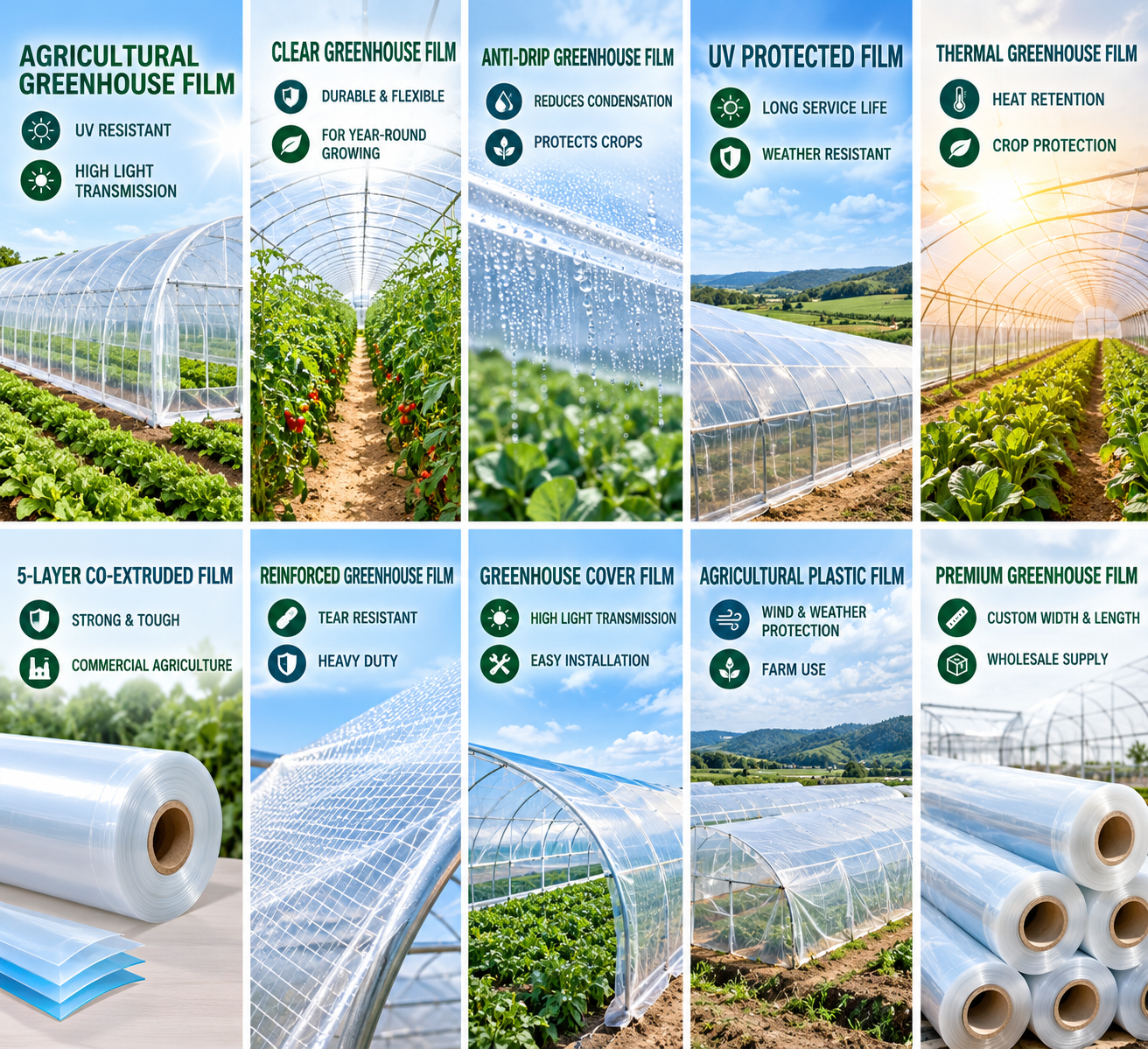
Greenhouse film is the flexible plastic cover that wraps a tunnel or greenhouse frame, replacing glass for most small and mid-size farms. For growers in Kenya, Uganda, Tanzania and other tropical markets, choosing the right film decides how much light your crops receive, how long the cover lasts under strong sun, and whether condensation drips onto your plants. This guide explains the material it is made from, the conditions it must survive, how to judge quality, and the day-to-day details that most suppliers do not tell you.
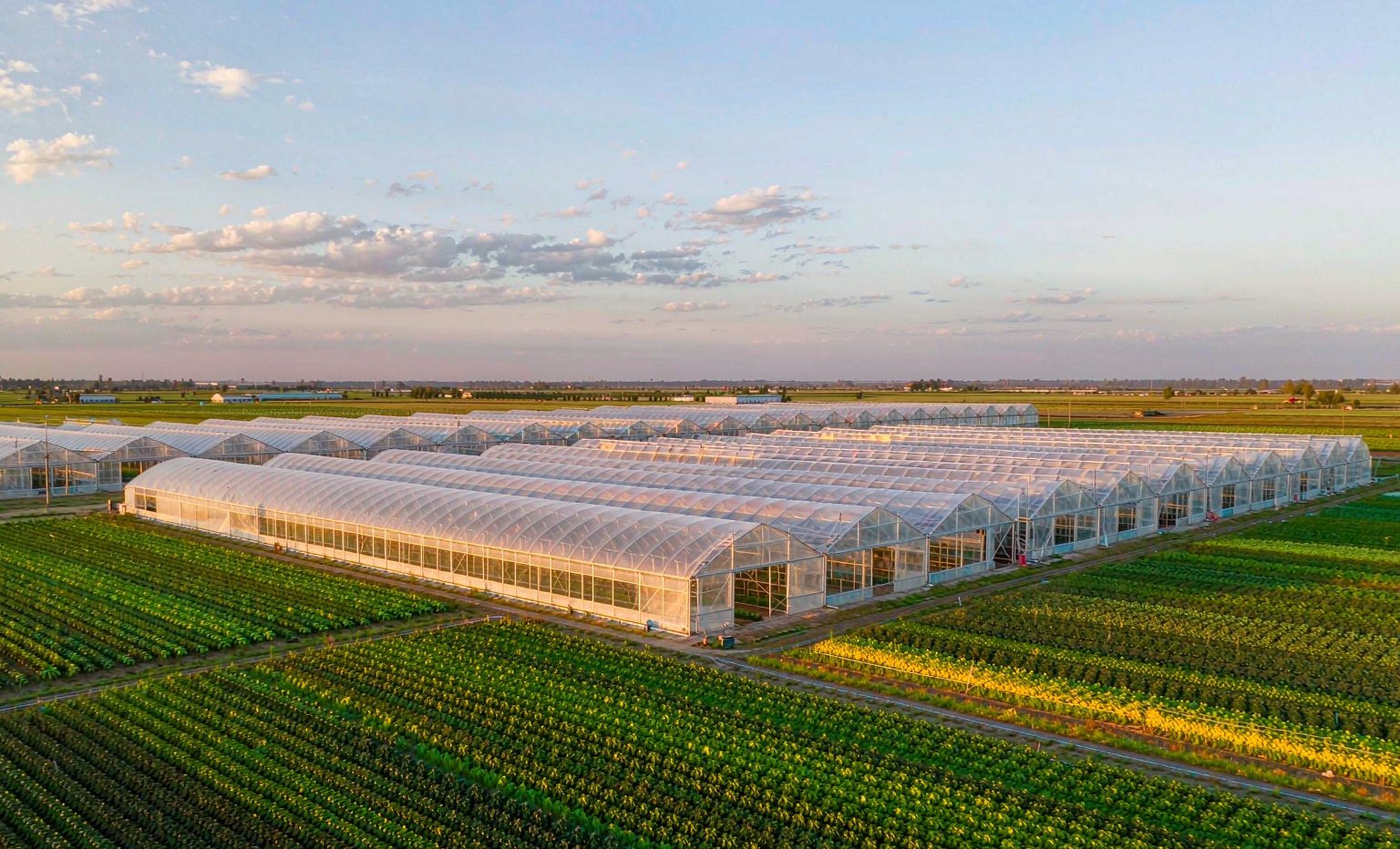
1. What greenhouse film is made of
Almost all agricultural greenhouse film is made from polyethylene PE and most durable commercial grades use LLDPE — linear low-density polyethylene as the main resin, often blended with LDPE. LLDPE gives the film its stretch, tear resistance and puncture strength, while the blending process sets how clear or diffuse the final sheet looks.
Quality film is usually produced by three-layer co-extrusion, where different additives are placed in different layers rather than mixed randomly:
- UV stabilizer: absorbs and blocks UV radiation so the film does not become brittle in strong tropical sunlight. This is the single biggest factor in lifespan.
- Anti-drip / anti-fog additive: spreads condensation into a thin transparent sheet instead of large water droplets, so light stays high and water does not drip onto leaves and fruit.
- Thermal / IR additive: slows heat loss at night, useful in cooler highland areas such as central Kenya.
- Anti-dust additive: keeps dust from bonding to the outer surface, which matters in dry, windy seasons.
Cheap or recycled resin film has few or none of these additives. It may look identical on the roll but turns brittle and cloudy within a few months.
2. Common types and what each is for
|
Type
|
Appearance
|
Best for
|
|
Clear / transparent film
|
High light transmission, roughly 85–92%
|
Leafy greens, seedlings, cool-season crops where maximum light is needed
|
|
Diffuse / milky film
|
Softens and spreads light, avoids hot spots
|
Tomatoes, peppers, cucumbers, flowers — prevents leaf and fruit burn under direct equatorial sun
|
|
Anti-drip film
|
Condensation runs down the walls instead of dripping
|
Humid crops, tomato and cucumber rows where leaf wetness spreads disease
|
|
Thermal / IR film
|
Reduces night heat loss
|
Cool highland farms, frost-sensitive crops
|
Most buyers order a combination film — UV stabilized + anti-drip + diffuse — rather than a single-feature sheet.
3. Thickness, roll size and expected lifespan
Film thickness is measured in microns (µm), not millimeters, and it directly relates to durability:
- 80–100 µm: light-duty, one-season cover; suitable for short cycles and low-budget trials.
- 120–150 µm: the most common choice for commercial tunnels under tropical sun; balanced strength and cost.
- 180–200 µm+: heavy-duty, high-wind or long-cycle crops; thicker does mean slightly lower light.
Widths commonly run from 2 m to 12 m depending on tunnel span, and rolls are sold by length (meters) and sometimes by weight. Always confirm the finished width after unfolding, not the folded width on the roll.
Expected lifespan is advertised as UV-stabilized years — typically 1, 3 or 4 years — but this is a claim, not a guarantee: real life depends on local UV intensity, wind, installation tension and cleaning. Ask the supplier for the stated UV grade and keep the purchase record.
4. Choose the film for your actual conditions
Before ordering, match the film to where your farm really is:
- Strong equatorial UV: inland Kenya, Tanzania and Uganda receive intense year-round sun; insist on a stated UV-stabilized grade, not ordinary construction sheeting.
- High temperature and ventilation: hot regions need good light but also side ventilation; thicker diffuse film reduces glare but must be paired with roll-up side walls.
- High humidity and drip disease: choose anti-drip film where tomatoes or cucumbers grow under dense canopy.
- Wind and monsoon storms: windy areas need heavier thickness, proper tension and strong fastening; a thin film tears at the anchor point first.
- Highland cold / occasional frost: add thermal IR properties for night warmth.
- Crop stage: seedlings and leafy crops favor clear film; fruiting crops favor diffuse anti-drip film.
5. How to judge film quality before you buy
Inspect the roll and a cut sample rather than trusting the price alone:
- Measure thickness at several points with a micrometer; quality film stays even across the sheet, while cheap film varies sharply and has thin edges.
- Look for defects: pinholes, fish-eye gels, uneven cloudiness, wrinkles or a joined patch mean production problems.
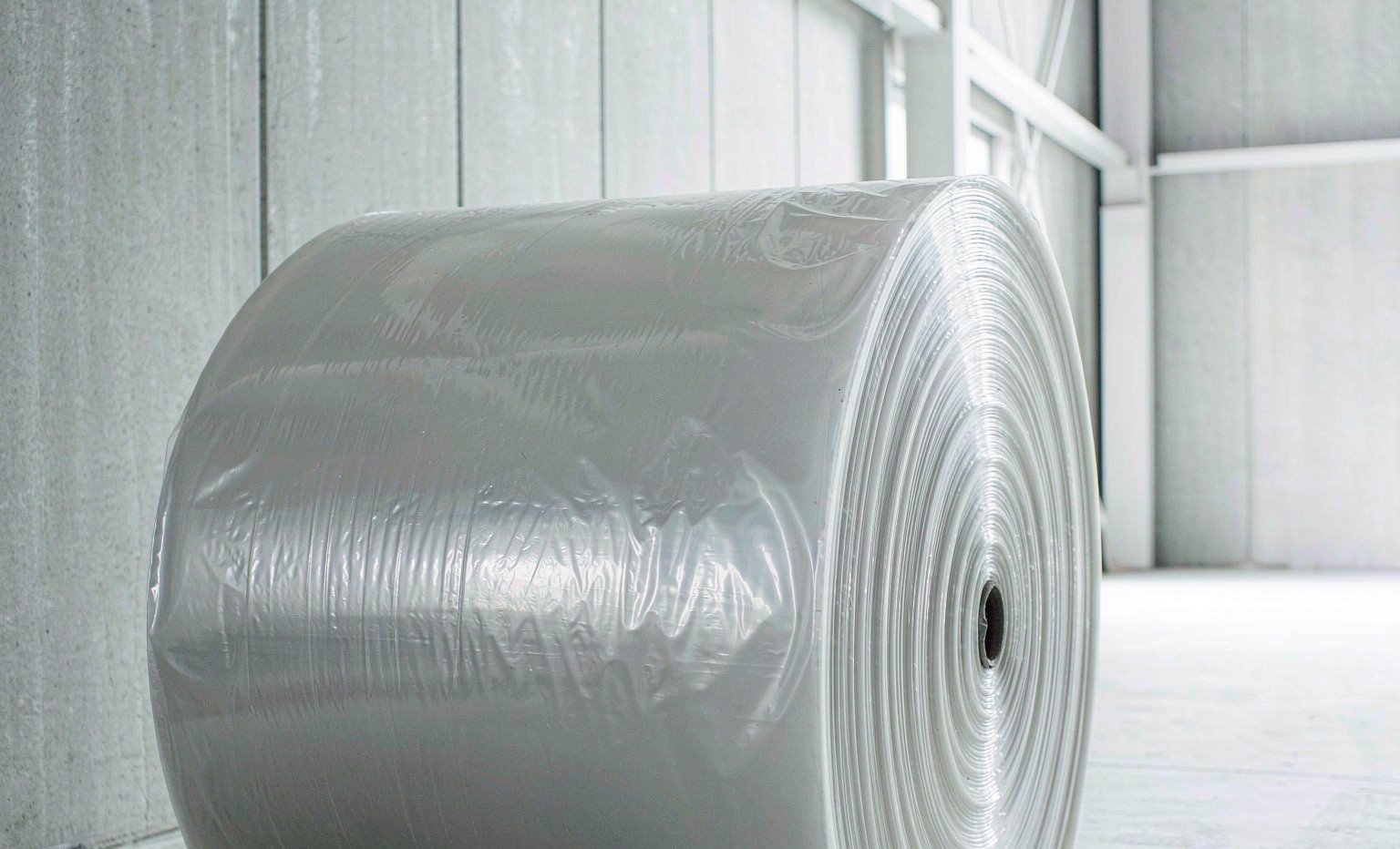
- Check the roll itself: tight, even winding with no loose layers, no visible breaks, and a clean label showing width, thickness, length and UV year rating.
- Test light transmission: hold a sample up to the sun; quality film is uniform, with no bright streaks or dull patches.
- Feel stretch and snap-back: a good PE film stretches and returns; brittle film cracks when folded sharply.
- Smell the resin: sharp, irritating fumes suggest recycled or low-grade material; quality film has only a mild plastic odor.
- Ask for the UV year claim in writing and any test report; do not accept “strong” or “long-lasting” as a specification.
6. Real-world installation and daily-use details
The cover fails most often at installation, not in the resin. Practical field points:
- Tension, not slack: pull the film tight and smooth on a warm, calm day; loose film flaps in wind and rubs through against the frame. Warm weather lets PE expand so it sits taut when cooled.
- Fix edges with channel wire or lock profiles, and secure with pull cords / ground anchors along arches; avoid tying film directly to sharp metal edges — use padding where metal contacts plastic.
- Overlap widths at joins by 20–30 cm and seal lap points; do not stretch the overlap tight, leave a little movement room.
- Ventilate first, then close: open side/roof vents on hot mornings to release heat and humidity, close before nightfall to trap warmth; condensation builds when air cannot move.
- Walk the tunnel weekly: check for small tears near anchors, worn spots under cords, and loose windings; patch small holes immediately with dedicated repair tape before they grow.
- Clean gently: rinse dust with low-pressure water; do not scrub with hard brushes or chemicals, which strip the anti-drip and UV layers.
- Store spare rolls upright in a cool, shaded, dry place, away from direct sun, heavy stacking and chemical fertilizers; never leave a roll exposed outdoors before use.
7. Common mistakes growers make
- Buying ordinary black or clear construction plastic instead of UV-stabilized agricultural film — it cracks within months.
- Judging only by price per roll; cheap film costs more when it is replaced twice a season.
- Ignoring anti-drip on humid fruiting crops and then blaming the plants for disease.
- Installing in cold weather, which prevents proper tension.
- Letting film rub against frame bolts and cords without padding.
Conclusion
Greenhouse film is an engineered cover, not just plastic sheeting. Start from the resin (LLDPE/LDPE), confirm the thickness in microns and the stated UV lifespan, match the type to your climate and crop, inspect thickness uniformity and defects before purchase, and protect the sheet with correct tension, fastening and weekly checks. Getting these details right lets one roll last its full advertised years and protect every crop cycle underneath.
Need help choosing thickness and type for your farm region?
Contact us via WhatsApp or send a message through our contact form with your size, crop and location, and we’ll recommend the right greenhouse film for you.