Shade nets are sold everywhere by percentage — 35%, 50%, 75% — but few salespeople can explain what the number actually measures, and fewer still can tell you which crop needs which rate. Choose too high and your tomatoes stretch and yield drops; too low and your nursery seedlings scorch. This guide turns the percentages into concrete crop decisions.
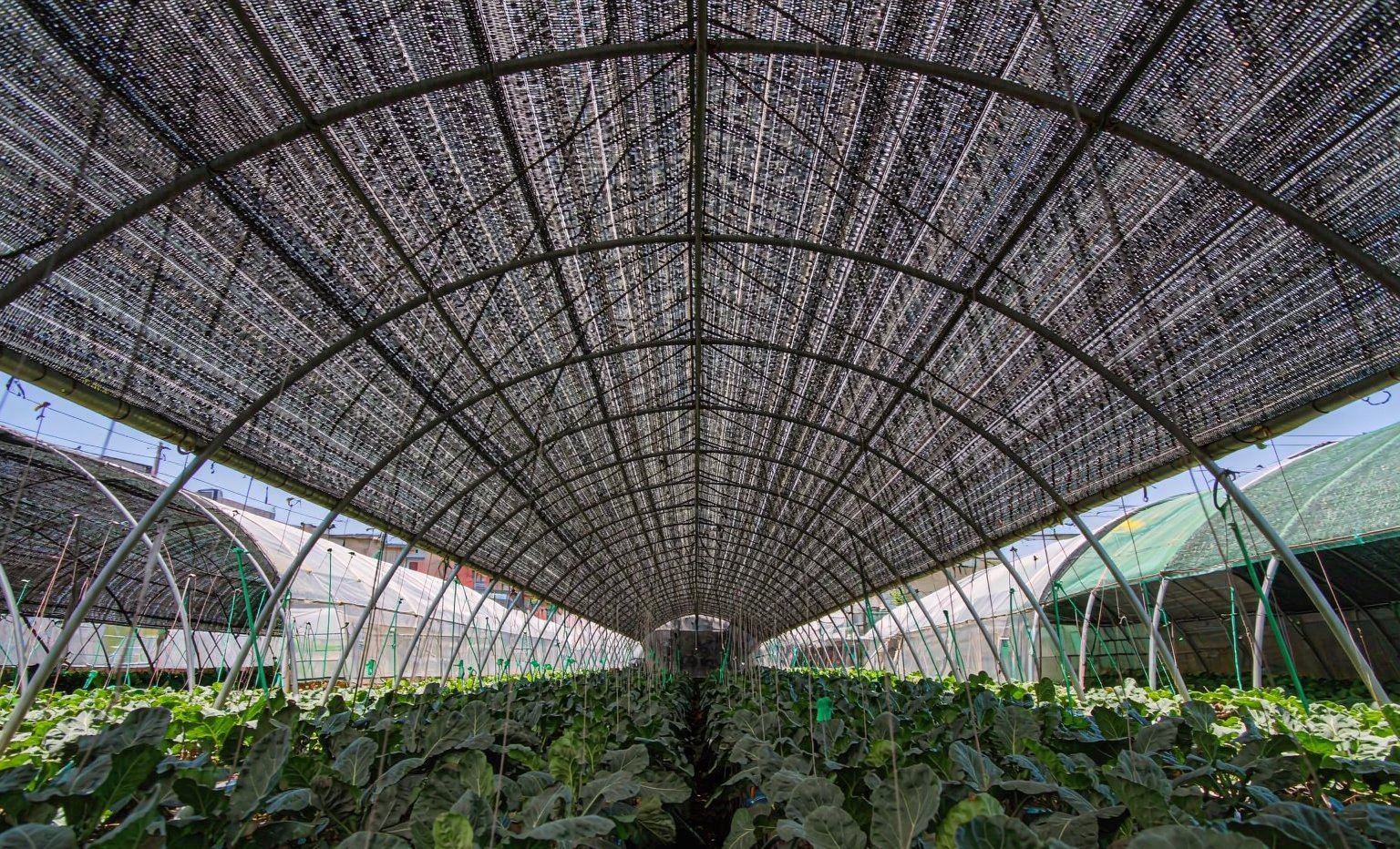
1. What the shading percentage really measures
The shading rate is the percentage of total sunlight the fabric blocks, measured with a light meter under the net in open sky. Two practical consequences follow:
- A 50% net still passes 50% of full sun — roughly 100,000 lux down to about 50,000 lux at midday. Most vegetable crops photosynthesize comfortably in that range.
- The number is measured flat and new. Stretched over a curved frame the effective shading drops a few points; a dusty net drops it further. Order one rate above your target if you need precision.
2. Shading rates by crop — the working table
| Shading rate | Light under net | Best for | Avoid for |
|---|---|---|---|
| 35% | High light, mild heat relief | Tomatoes, peppers, cucurbits in fruiting stage; cabbage and leafy greens in hot season | Shade-loving ornamentals; young nurseries in desert heat |
| 50% | Balanced — the all-rounder | Nurseries and seedlings, most vegetables in lowland tropics, cut flowers, coffee seedlings | Crops needing maximum light in cloudy highlands |
| 75% | Low light, strong cooling | Orchids and ferns, shade-loving ornamentals, livestock shading, car parks and yards | Any fruiting vegetable — yields collapse from etiolation |
| 90% | Deep shade | Windbreak use, construction shading, fish pond covers | Living crops almost universally |
3. Colour: black, green or white?
- Black HDPE — the standard. Absorbs heat itself but gives the most uniform, reliable shading rate and the best price per square metre. Choose this unless you have a specific reason not to.
- Green — similar shading to black with a more natural look; popular for garden centres and landscape work.
- White / translucent — scatters light instead of blocking it; keeps a brighter house with less heat build-up. Good for seedling nurseries where you want cooling without gloom, at a higher price.
4. Knit type: mono×mono vs tape×tape
This is where cheap nets quietly cut corners. Tape×tape nets (plastic ribbons in both directions) are light and cheap but tear like paper once one ribbon snaps. Monofilament×monofilament nets use round UV-stabilized yarn in both directions: heavier, three to five times more tear-resistant, and they hold their shading rate for years. For anything permanent — nurseries, livestock, car shading — insist on mono×mono with a stated UV warranty. For a single season’s windbreak, tape netting is fine.
5. Installation details that decide lifespan
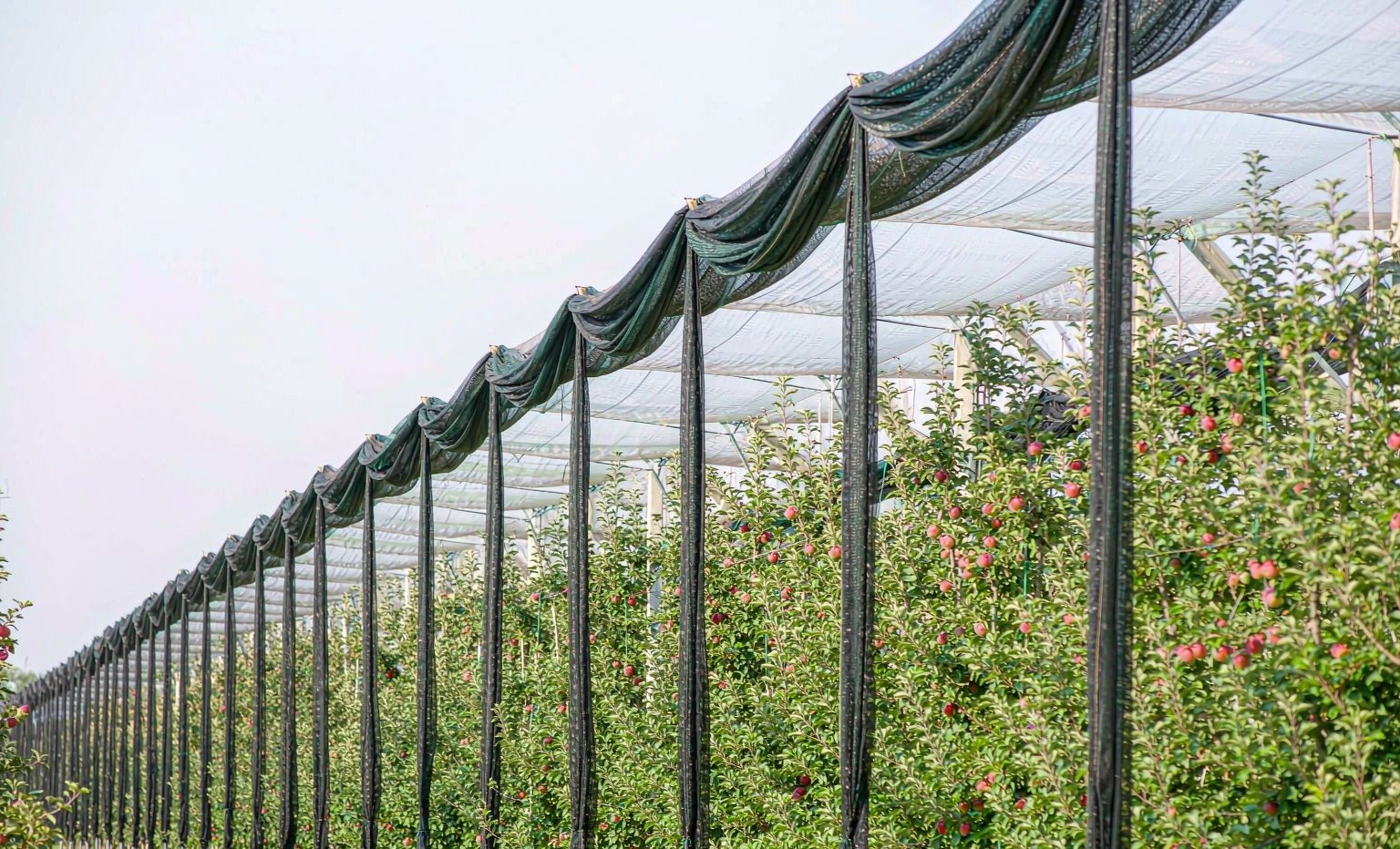
- Install with slack, not tension — unlike greenhouse film, nets work best with a slight sag; a drum-tight net concentrates stress at the grommets.
- Keep 2–3 metres of height above the crop for airflow; a net touching the plants rubs leaves and transmits wind directly.
- Slope the roof 10–15° so hail and heavy rain shed to the sides instead of pooling in the middle.
- Fix with rope or wire through grommets every 50–100 cm, never by clamping the fabric directly between metal.
- Remove or slacken during storms if the structure is light — wind load on a 50% net is significant.
6. Frequently asked questions
Is a higher percentage always better in very hot climates?
No. Above the rate your crop needs, yields fall — tomatoes under 75% net grow tall and thin with almost no fruit. Match the rate to the crop (see table), then manage heat with ventilation and irrigation instead.
How many seasons does a good shade net last?
A mono×mono HDPE net with a proper UV package lasts 4–6 years in equatorial conditions; tape nets often fail within 1–2 seasons. UV stabilizer quality — not fabric weight — is the main variable.
Can shade net replace greenhouse film?
No — nets stop sunlight and hail but not rain, wind-driven pests or cold. They solve different problems: film makes a controlled climate; net softens an open one. Many farms use both: film on the roof, net over the vents.
What should I confirm before ordering?
Shading rate (measured, not estimated), knit type (mono×mono or tape), UV warranty in years, fabric weight in g/m², and finished width. Get all four on the proforma invoice.
Not sure which shading rate fits your crop and site?
Send us your crop list and location — we will recommend the rate, knit and fixing plan within 24 hours.
Related guides
Shade Net product line and specifications
Widths, weights, knit types and UV packages for wholesale buyers.
Read more →
Mesh sizes that stop which pest
Pair your shade plan with insect protection on vents and doors.
Read more →
Talk to the Factory Directly
Technical replies within 24 hours, Mon–Sat.
Read more →